
NewsDetails
Troubleshooting Common Faults in Water Line and Feed Line Systems of Farming Facilities
author:Muzan time:2026-10-15 11:25:44 Click:152
Introduction
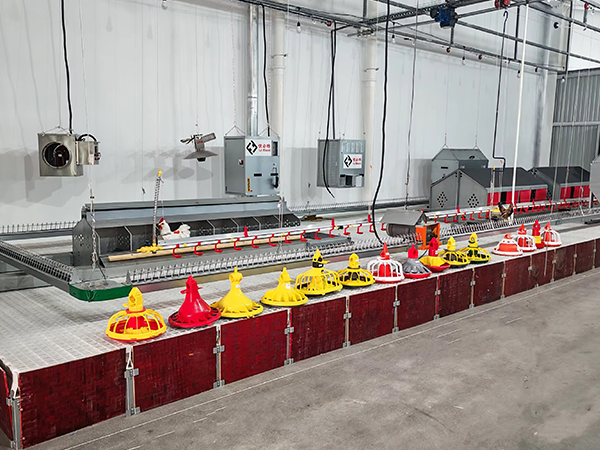
The water and feed line system is a core piece of equipment in modern poultry farming. Over long-term operation, various malfunctions are inevitable, such as water line leaks, unstable water pressure, feed line stoppage, uneven feed distribution, and motor overheating. If these issues are not promptly identified and resolved, they can significantly affect the drinking and feeding of poultry, leading to decreased production performance and even economic losses. This article summarizes the most common malfunctions of the water and feed line system, provides a detailed analysis of their causes, and offers systematic troubleshooting steps and solutions to help farmers quickly restore equipment operation.
Fault 1: Water Line System Leak
Symptoms of the fault: Leaks occur in the water line pipes or drinkers, resulting in a damp floor, moldy bedding, and severe waste of water resources.
Cause Analysis: 1. Loose or improperly sealed pipe joints; 2. External impact or freezing cracks in the pipes; 3. Aging seals, worn valves, or excessive water pressure in the water dispenser; 4. Ruptured diaphragm or aging seals in the pressure regulator; 5. Aging seals or cracked filter housing in the filter; 6. Excessive system water pressure.
Solution: For leaking joints, re-wrap the PTFE tape and tighten; for pipe cracks, use a repair clamp or replace the pipe section; for leaking water dispensers, replace the sealing ring or the entire dispenser, and reduce water pressure if multiple leaks occur; for leaking pressure regulators and filters, replace the sealing ring or the entire device; adjust the pressure regulator to control water pressure between 0.01 and 0.03 MPa.
Fault 2: Unstable Water Pressure in the Water Line System
Symptoms: The water pressure fluctuates, the pressure gauge needle swings significantly, and the water dispenser output varies between high and low.
Cause Analysis: 1. Fluctuations in input water pressure (variations in municipal water pressure, pump start/stop, simultaneous water usage in multiple pens); 2. Aging of the pressure regulator diaphragm, spring fatigue, and valve sticking; 3. Air accumulation in the pipes causing air locks; 4. Localized blockages in the pipes; 5. Sudden increase in water consumption due to concentrated drinking by poultry; 6. Undersized main pipe diameter or excessively long water lines.
Solution: Install a water storage tank or pressure tank to buffer input water pressure fluctuations; repair or replace the pressure regulator, and replace aged diaphragms and fatigued springs; open the end exhaust valve to remove air from the pipeline; perform backflush cleaning or chemical cleaning of the pipeline to remove blockages; increase the diameter of the main pipeline, raise the water supply pressure, or install a water storage tank; shorten the water line length to within 100 meters and optimize the pipeline design.
Fault 3: Insufficient Water Output at the End of the Water Line
Symptom: Water flows normally at the front of the water line, but the flow rate is low or absent at the end, resulting in insufficient water intake for the poultry at the end.
Cause Analysis: 1. The water line is too long, resulting in high pressure loss along the line; 2. Blockage caused by sediment and biofilm inside the pipes; 3. The pipes are not installed horizontally, with the end being too high; 4. Insufficient water supply from the main pipe or the inlet valve is not fully open; 5. There is a leak in the middle of the water line; 6. The diameter of the water line pipe is too small.
Solution: Divide the long water line exceeding 100 meters into two segments for separate water supply, or add a water supply point in the middle; thoroughly backflush the pipeline to remove sediment; use a level to measure and adjust the pipeline to keep it horizontal; fully open the inlet valve, increase the diameter of the main pipeline, or raise the water supply pressure; locate and repair the leak point in the middle; replace the water line pipeline with a larger diameter (6/8 inch or 1 inch pipe recommended).
Fault 4: The material line system is not operating
Fault Symptoms: After startup, the motor runs but the plug plate chain or screw does not rotate, and the feed cannot be conveyed.
Cause Analysis: 1. Wear, fatigue, or overload fracture of the slat chain; 2. Chain disengagement from the drive wheel or steering wheel; 3. Blockage in the feed pipe caused by foreign objects or feed clumps; 4. Slippage due to severe wear of the drive wheel teeth; 5. Motor burnout, bearing damage, or capacitor failure; 6. Gear damage, oil shortage, or bearing damage in the reducer; 7. Coupling damage or looseness; 8. Power cut-off triggered by the overload protector.
Solution: Replace the broken chain link or the entire chain, and inspect the wear condition of the whole chain; reinstall the detached chain onto the wheel, adjust the tension, and replace the damaged steering wheel bearing; open the pipe to remove blockages and clumps, check whether the feed is damp, and clean the silo regularly; replace the worn drive wheel; repair or replace the motor, and replace the capacitor or bearing; replenish the gear oil or replace the reducer; replace the damaged coupling and ensure coaxiality; after eliminating the cause of overload (blockage, jamming), reset the protector and restart.
Fault 5: Uneven Material Discharge on the Line
Symptom: The feed line operates normally, but the feed levels in the troughs are uneven, with some overfilled and others underfilled.
Cause Analysis: 1. Inconsistent opening adjustments of the feed outlets; 2. Some feed outlets are blocked by feed clumps or foreign objects; 3. Unstable feed line rotation speed; 4. Poor flowability of feed due to uneven particle size, high powder content, or moisture; 5. Insufficient feed pressure due to low feed level in the silo; 6. Uneven wear at the bottom of the feed pipe; 7. The feed trough is not properly aligned with the feed outlet.
Solution: Adjust the openings of all discharge ports to be consistent, and fine-tune them repeatedly after a trial run; clear the clogged discharge ports, ensure the feed is dry, and clean them regularly; inspect the motor and reducer to ensure stable rotation speed, and install a voltage stabilizer if the voltage is unstable; select feed with uniform particles and low powder content, dry or replace damp feed, and ensure the feed tower is moisture-proof; replenish feed promptly to keep the feed level in the tower at no less than 1/4, and install a level alarm; replace severely worn feed pipes; adjust the position of the feed trough to align directly with the discharge port and secure it firmly.
Fault 6: Material Line Motor Overheating
Symptom: The motor becomes excessively hot to the touch during operation, emits a burnt smell, and may even burn out and stop.
Cause Analysis: 1. Feed line overload (pipe blockage, feed clumping, chain jamming); 2. Damaged motor bearings or poor lubrication; 3. Damaged cooling fan or blocked cooling vents; 4. Power supply voltage too high or too low; 5. Three-phase motor operating with a missing phase; 6. Motor power too low causing long-term overload; 7. Frequent starts resulting in high starting current; 8. High ambient temperature making heat dissipation difficult.
Solution: Eliminate overload causes (clear blockages, fix jams); replace motor bearings and add grease; replace the cooling fan, clean the heat dissipation holes, and maintain ventilation; install a voltage regulator to ensure normal voltage; check the three-phase power supply and wiring, repair loose or disconnected points, and immediately shut down if a phase is missing; replace with a higher-power motor (leaving a 20%-30% power margin); reduce the number of starts and use a soft starter or variable frequency drive; enhance ventilation and cooling in summer, and install additional cooling fans on the motor.
Fault 7: Water Line Lifting Device Failure
Symptom: The lifting device cannot lift or lower properly, or the lifting/lowering is unstable or out of synchronization.
Cause Analysis: 1. Wear, rust, or breakage of the wire rope; 2. Damage to the pulley bearing or jamming by foreign objects; 3. Malfunction of the manual or electric winch; 4. Failure of the electric lifting motor; 5. Overweight waterline (excessive suspended objects or water accumulation in the pipe); 6. Deformation of the lifting rod or bracket; 7. Asynchronization caused by inconsistent tension in the wire ropes.
Solution: Replace worn or rusted wire ropes and inspect them regularly; clean the sheave bearings and add lubricating oil, replacing any damaged bearings; repair or replace the winch; repair or replace the lifting motor; remove excess hanging objects from the waterline and drain water from the pipes; correct deformed lifting rods and reinforce connection points; uniformly adjust the length and tension of each wire rope to ensure synchronized horizontal lifting of the waterline.
General Troubleshooting Steps
When encountering a fault in the water line or feed line system, you can systematically troubleshoot it by following these general steps:
1. Observe the phenomenon: Carefully observe the specific manifestations of the fault, such as whether it is completely non-functional or operating abnormally, and whether there are any abnormal noises, odors, smoke, or water leaks. Identify the location of the fault and determine whether it is localized or affects the entire system.
2. Understand the background: Ask about the situation before the failure occurred, whether any maintenance, adjustments, or component replacements were performed, whether there were any power outages, water outages, or voltage fluctuations, and whether the failure occurred suddenly or gradually worsened.
3. Troubleshoot from simple to complex: First, check the most easily identifiable causes, such as whether the power is connected, whether the valve is open, whether there is a water or power outage, and whether there are any obvious blockages or breaks. Then, gradually inspect the more complex internal components. Do not disassemble the equipment right away to avoid unnecessary complications.
4. Sectional Troubleshooting: For pipeline-related faults, the sectional troubleshooting method can be adopted, checking segment by segment from the water inlet to the terminal end to narrow down the scope of the fault. For example, if there is no water flow in the water line, first check whether the main pipeline has water, then check the pressure regulator, and then check the front, middle, and terminal ends of the water line to gradually locate the fault point.
5. Replacement Method: For components suspected of being damaged, they can be replaced with known good components of the same model for testing. If the fault disappears after replacement, it indicates that the original component is damaged. This is an effective method for quickly locating faults, especially applicable to components such as motors, capacitors, and voltage regulators.
6. Safety First: When troubleshooting electrical faults, cut off the power supply first and do not perform live operations to prevent electric shock. When inspecting motors and control boxes, have a professional electrician perform the work. When troubleshooting pipeline faults, first close the water inlet valve and drain the water in the pipeline to prevent water spraying.
Preventive Measures
Most failures can be prevented through routine maintenance. Aquaculture farmers should establish a system for daily equipment inspections and regular maintenance:
1. Check the operating status of the water lines and feed lines daily, listen for any abnormal sounds, and inspect for any water or feed leaks. Address any abnormalities promptly.
2. Check the water pressure, pressure gauge, water dispenser output, and feed line operation weekly, and make timely adjustments and handling.
3. Clean the water line pipes and drinkers monthly, inspect the feed line chain for wear, and lubricate the bearings and pulleys.
4. Replace the waterer's sealing ring, pressure regulator diaphragm, and other wear parts every 3-6 months, inspect the motor and reducer, and replenish or replace the lubricating oil.
5. Conduct a comprehensive inspection of the water line and feed line system annually, replace aged components, tighten loose connections, and ensure the system is in good condition.
6. Keep commonly used spare parts and maintenance tools on hand, such as water dispensers, sealing rings, springs, motor capacitors, bearings, etc., to ensure timely replacement in the event of a failure.
Summary
Failures in the water and feed line systems of poultry farms are diverse, but most can be quickly resolved by mastering the correct troubleshooting methods and solutions. Farmers should be familiar with the system's structure and operating principles, understand the causes and solutions for common failures, and systematically troubleshoot by following these steps: observing symptoms, understanding the background, proceeding from simple to complex, segmenting the system for inspection, and using the replacement method, always prioritizing safety. Additionally, establish a routine inspection and regular maintenance system to prevent issues: conduct daily checks, weekly maintenance, monthly cleaning, quarterly replacement of wear parts, and annual comprehensive inspections, while keeping common spare parts and tools on hand. Only by effectively managing and maintaining the equipment can the long-term stable operation of the water and feed line systems be ensured, providing sufficient water and feed for poultry, guaranteeing the smooth progress of farming operations, and improving farming efficiency.
References
1. Poultry Branch of the China Animal Husbandry Association. Report on the Development of Poultry Farming Equipment in China [R]. Beijing: China Animal Husbandry Association, 2023.
2. National Animal Husbandry Station. Standard for the Management of Facilities and Equipment in Large-Scale Poultry Farms [M]. Beijing: China Agriculture Press, 2022.
3. Chinese Academy of Agricultural Mechanization Sciences. Handbook of Livestock Machinery Maintenance and Repair [M]. Beijing: China Machine Press, 2021.
 Recommended Products
 Contact us
—— Contact:Manager
—— Tel:+86 15031740006
—— Email:mzan91369@gmail.com
—— Url:https://www.muzanlivestock.com
—— Address:Cang County, Cangzhou City, Hebei Province, China