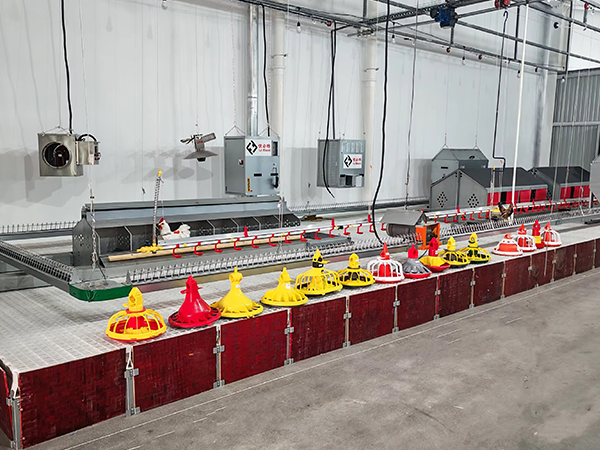

NewsDetails
FAQ on Selecting Aquaculture Equipment
author:Muzan time:2026-10-15 11:28:34 Click:116
Introduction
Selecting appropriate aquaculture equipment is a crucial aspect of building and operating a farm, as the quality and performance of the equipment directly affect aquaculture efficiency and economic benefits. However, many farmers often face various dilemmas when making purchases: the market offers a wide variety of products with numerous brands and significant price differences, making it difficult to know how to choose; they are unsure which parameters are most important and are easily misled by promotional claims; they worry about buying low-quality products; they do not know how to compare cost-effectiveness; and they are concerned about the lack of after-sales service guarantees. This article compiles the most common questions regarding the selection of aquaculture equipment and provides detailed answers to help farmers master selection techniques and purchase reliable, cost-effective aquaculture equipment.
Question 1: What factors should be considered when purchasing aquaculture equipment?
Answer: The following key factors should be considered comprehensively:
1. Applicability: First, consider whether the equipment is suitable for your specific breeding species, scale, and method. Different species have different equipment requirements, equipment configurations vary significantly depending on the scale, and different breeding methods (cage rearing, floor rearing, free-range) also have different equipment requirements. Clarify your actual needs before purchasing and select the appropriate equipment.
2. Quality and Reliability: Quality is the most important factor, directly affecting service life and performance. High-quality equipment uses premium materials, features high processing precision, stable performance, a low failure rate, and a long lifespan; inferior equipment is prone to damage, has a high failure rate, and results in higher overall costs. When purchasing, carefully inspect the materials, workmanship, and component quality.
3. Performance Metrics: Different devices have key performance metrics, such as the water output, operating water pressure range, and sealing performance of water dispensers; and the pressure adjustment range, pressure stabilization accuracy, and flow rate of pressure regulators. Select devices with appropriate metrics based on actual needs. Do not blindly pursue high metrics, nor choose devices with insufficient metrics.
4. Price and Cost-Effectiveness: Price is an important consideration, but not the only one. Compare prices while ensuring quality and performance, and choose the most cost-effective option. Do not focus solely on the initial purchase price; also consider comprehensive costs such as service life, maintenance costs, and failure rates. Although high-quality equipment may be slightly more expensive, its longer lifespan and lower maintenance costs result in a lower overall cost.
5. After-Sales Service: It is inevitable that equipment will experience malfunctions during use, requiring repairs and replacement of parts, making after-sales service crucial. When making a purchase, understand the supplier's after-sales service policies, including warranty period, repair response time, parts supply, and technical support. Choose a supplier with good after-sales service to ensure that any issues are resolved promptly.
6. Brand Reputation: A brand is a symbol of quality and service. Products from well-known brands usually have more guaranteed quality and more comprehensive services. You can prioritize brands with high recognition and a good reputation, but do not blindly trust them; some small and medium-sized brands may also offer good quality at more affordable prices. Make a comprehensive judgment based on actual quality and user reviews.
Question 2: How to determine the quality of a water dispenser?
Answer: The following aspects can be used to make a judgment:
1. Check the material: The valve body of a high-quality water dispenser is made of food-grade PP or ABS plastic, with a smooth surface, no burrs, no odor, and uniform color; the nipple is made of high-quality stainless steel, with a shiny surface and no rust; the sealing ring is made of food-grade silicone, with good elasticity and no odor. Low-quality products use recycled plastic, with a rough surface, odor, and uneven color; the nipple is made of low-quality stainless steel or chrome-plated iron, which is prone to rusting; the sealing ring is made of ordinary rubber, with poor elasticity and prone to aging.
2. Inspect the Workmanship: High-quality water dispensers feature precise processing, tight fit between components, clear threads, and smooth installation and removal without any looseness or sticking. Low-quality products have rough processing, unclear threads, large gaps between components, and difficult installation and removal. You can disassemble and reassemble the water dispenser to feel the precision of the fit.
3. Water Flow Test: Connect to a water-filled pipe for testing. A high-quality water dispenser responds sensitively to water flow; water flows immediately upon lightly pressing the nipple and stops instantly upon release, with no dripping or leaking. The water flow rate is moderate and stable. A low-quality water dispenser has a sluggish response, requiring firm pressure to release water, or continues to drip or leak after release, with an unstable flow rate. Testing can be conducted under different water pressures.
4. Test the seal: After installation, leave it under normal water pressure for a period of time and observe whether there is any leakage. High-quality products have good sealing performance and do not leak even after prolonged use. You can place a dry piece of paper under the water dispenser and check for water stains after a while.
5. Check Certifications: High-quality products typically hold certifications such as ISO9001 quality management system certification and food contact material safety certification. When purchasing, check for relevant certification certificates; certified products offer greater quality assurance.
6. Ask about reputation: Inquire with other farmers about their usage experiences, focusing on which brands offer superior quality, longer lifespan, and lower failure rates. Actual user experiences provide the most authentic evaluations, making them more reliable than merchant promotions. You can also search for user reviews online.
Question 3: How should a voltage regulator be selected?
Answer: When selecting a voltage regulator, the following points should be noted:
1. Determine the pressure regulation range: Poultry drinking systems generally require an output water pressure of 0.01–0.03 MPa. A low-pressure regulator with an output pressure regulation range of 0–0.05 MPa or 0–0.1 MPa should be selected. Do not choose a regulator with an excessively wide pressure regulation range, as this may result in insufficient regulation precision in the low-pressure range.
2. Determine the flow rate specification: Select based on the maximum water usage. The maximum water usage for each 100-meter-long layer water line is approximately 0.5–1 cubic meters per hour. Calculate the total water usage based on the number of water lines, and select a pressure regulator with a flow rate specification greater than the total water usage, leaving a 20%–30% margin. An insufficient flow rate will result in inadequate water pressure during peak usage periods.
3. Consider the input water pressure: Understand the water supply pressure of the farm and select a pressure regulator that matches the input water pressure range. Generally, tap water is 0.2-0.4 MPa, while well water varies depending on the pump head. The maximum allowable input water pressure of the regulator should be higher than the actual supply water pressure. If the water pressure fluctuates significantly, choose one with good pressure stabilization performance or install a storage tank at the front end.
4. Select Type: Diaphragm type is low-cost, easy to adjust, and provides good pressure regulation, making it the most commonly used option; however, the diaphragm requires periodic replacement. Piston type features a robust structure, long lifespan, high pressure resistance, and low water quality requirements, but it is more expensive. Generally, a diaphragm type is sufficient for most farms; a piston type can be chosen if water quality is poor or high reliability is required.
5. Focus on additional features: Choose a model with a pressure gauge for real-time water pressure monitoring, and one with a filter to protect internal components and extend its lifespan. The more additional features, the higher the price; select based on your actual needs.
6. Selecting a Brand and After-Sales Service: The internal structure of a pressure regulator is precise, and there are significant differences in quality. Choosing products from reputable manufacturers ensures better quality and after-sales support. Be sure to understand the warranty period and the availability of spare parts.
Question 4: Is it reliable to buy aquaculture equipment online? What should you pay attention to?
Answer: Online shopping has advantages such as transparent pricing, a wide selection, and home delivery, but it also carries risks such as not being able to see the physical product, difficulty in judging quality, and inconvenient after-sales service. The following points should be noted:
1. Choose legitimate platforms and merchants: Select well-known e-commerce platforms and reputable merchants. Check business licenses, years of operation, store ratings, and user reviews. Prioritize official flagship stores, brand-exclusive stores, or merchants with a long operating history and high ratings.
2. Carefully review product details: Read the product description, specifications, material information, usage instructions, and after-sales service carefully. Do not rely solely on images and prices, as images may be enhanced. Ensure that the specifications and model match your requirements and that all accessories are included.
3. Check user reviews: Focus on reviews with photos and follow-up reviews to understand actual usage effects, quality, installation experience, and after-sales service. Be careful to identify fake reviews; a large number of similar reviews lacking details may be fabricated. Negative and neutral reviews often reflect real issues more accurately.
4. Compare Prices: Compare multiple sellers for the same product and choose a reasonable price. However, do not focus solely on price; prices that are too low may indicate quality issues or counterfeits. Prioritize the best value for money while ensuring quality. Ensure the configurations are identical when comparing.
5. Confirm After-Sales Service: Before purchasing, confirm the after-sales policy with the merchant, including warranty period, return and exchange policy, repair methods, spare parts supply, and technical support. Keep chat records and purchase receipts. Choose merchants that support seven-day no-reason returns, offer shipping insurance, and have a long warranty period.
6. Try a small amount first: When purchasing a large quantity of a brand for the first time, buy a small amount to test it first. Only proceed with bulk purchasing after confirming that the quality and effectiveness meet your expectations, thereby reducing risk.
7. Pay attention to logistics and acceptance: Aquaculture equipment is often large or heavy, and may be damaged during transportation. Upon receipt, inspect the goods before signing for them. Check whether the outer packaging is intact, whether the product is damaged, and whether all accessories are included. If any issues are found, take photos as evidence promptly and contact the merchant.
Question 5: Should you buy cheap or expensive aquaculture equipment?
Answer: This is a question that many farmers are concerned about, and it should be comprehensively judged based on specific circumstances:
1. Calculate the total cost of ownership: Do not look only at the initial purchase price; calculate the total cost = purchase price + maintenance cost + replacement cost + loss due to failures. For example, a cheap water dispenser costs 5 yuan and lasts 1 year, with 1 yuan in annual maintenance; an expensive one costs 10 yuan and lasts 3 years, with 0.5 yuan in annual maintenance. The 3-year total cost of the cheap one is 18 yuan, while the expensive one is 11.5 yuan, clearly making the expensive one more cost-effective.
2. Consider usage frequency and importance: For critical equipment with high usage frequency and significant impact on aquaculture (such as waterers, pressure regulators, and feed line motors), high-quality options should be selected, as the losses caused by their failure far exceed the price difference. For auxiliary equipment with low usage frequency and minimal impact, moderately priced options are acceptable.
3. Consider financial affordability: If the farm is facing tight funding during the initial construction phase, you can choose moderately priced options that meet basic quality standards, build the facility first, and upgrade it gradually later. However, avoid choosing options with poor quality, as frequent replacements and breakdowns may result in greater losses. If funds are sufficient, it is recommended to invest in high-quality options from the start.
4. Distinguish device types: For devices with high technical content and complex structures (motors, reducers, electronic devices), higher-priced options are significantly better in quality, so the higher-quality ones should be selected. For devices with simple structures and low technical content (ordinary plastic feed troughs, water bowls), the quality improvement from higher prices may not be significant, so moderately priced options can be chosen.
5. Avoid extremes: Do not buy the cheapest just to save money, nor blindly pursue the most expensive. Choosing the cheapest may result in poor quality that breaks down quickly, ultimately costing more; blindly pursuing the most expensive may lead to unnecessary spending, as some high-end features may go unused. Choose options with the best value for money based on your actual needs and financial capacity.
Question 6: How to Find a Reliable Aquaculture Equipment Supplier?
Answer: You can search and filter through the following channels:
1. Peer Recommendations: Ask other farmers which suppliers' equipment they use and how the quality and service are. Actual experiences from peers are the most authentic recommendations. Inquire with multiple suppliers and compare them comprehensively.
2. Industry Exhibitions: Participate in industry exhibitions such as the China Animal Husbandry Expo to view and compare products from different manufacturers on-site and communicate directly with them. Promotional offers are usually available during the exhibitions. Those unable to attend in person may entrust a purchasing agent to visit on their behalf.
3. Industry Media and Platforms: Follow media, magazines, websites, and official accounts focused on the livestock industry, as these platforms frequently introduce and recommend high-quality suppliers and products. You can also communicate with other farmers on industry forums, QQ groups, and WeChat groups.
4. E-commerce platforms: Search on well-known e-commerce platforms, review merchant store information, user reviews, and sales volume to filter for reputable merchants. Prioritize official flagship stores, brand-exclusive stores, or those with a long operating history and high ratings.
5. On-site Inspection: For large purchase volumes or high-value orders, it is recommended to conduct on-site inspections at the supplier's factory or physical store to verify production scale, equipment, quality management, and inventory, and to personally confirm their capabilities and product quality. This also provides an opportunity for face-to-face communication to negotiate better prices and services.
6. Screening Criteria: Complete qualifications (such as business license, production license, etc.); a certain production scale and years of operation; reliable product quality with certifications; comprehensive after-sales service with a professional team; reasonable price with high cost-effectiveness; good reputation and positive user reviews.
7. Start with collaboration, then deepen the relationship: When working with new suppliers, begin with small-batch purchases to test quality and service. Once satisfied, gradually increase order volumes to establish a long-term partnership. Avoid making large purchases or paying substantial prepayments from the outset.
Summary
Selecting aquaculture equipment is a task that requires careful consideration, as the quality and performance of the equipment directly affect aquaculture efficiency and economic benefits. Farmers should comprehensively consider factors such as applicability, quality reliability, performance indicators, price and cost-effectiveness, after-sales service, and brand reputation, rather than focusing solely on price. For critical equipment such as waterers and pressure regulators, focus on quality indicators such as material, workmanship, water output performance, and sealing performance. When purchasing online, choose reputable platforms and merchants, carefully review product details and reviews, confirm after-sales service, conduct a small-scale trial first, and pay attention to acceptance. When choosing between cheap and expensive options, calculate the total cost of ownership, consider usage frequency and importance, and make reasonable choices based on economic affordability without going to extremes. Seek reliable suppliers through multiple channels and establish long-term, stable partnerships. Only by mastering the correct selection methods can farmers purchase aquaculture equipment that is reliable in quality, cost-effective, and suited to their specific needs, thereby providing strong support for the efficient operation of the farm.
References
1. China Animal Husbandry Association. China Livestock and Poultry Farming Equipment Procurement Guide [R]. Beijing: China Animal Husbandry Association, 2023.
2. National Animal Husbandry Station. Guide to the Selection and Configuration of Facilities and Equipment for Livestock and Poultry Farms [M]. Beijing: China Agriculture Press, 2022.
3. China National Agricultural Machinery Association. Handbook on Quality Identification and Selection of Livestock Machinery Products [M]. Beijing: China Agricultural Science and Technology Press, 2021.
 Recommended Products
 Contact us
—— Contact:Manager
—— Tel:+86 15031740006
—— Email:mzan91369@gmail.com
—— Url:https://www.muzanlivestock.com
—— Address:Cang County, Cangzhou City, Hebei Province, China