
NewsDetails
Detailed Guide on Selecting and Using Automatic Poultry Waterers
author:Muzan time:2026-10-15 11:16:18 Click:66
Introduction
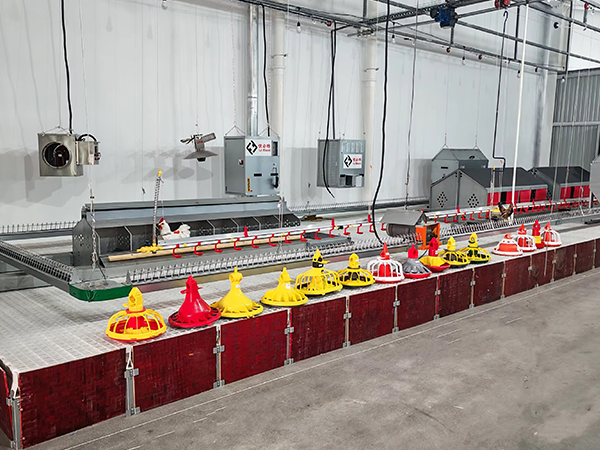
Automatic poultry water bowls are drinking devices widely used in poultry farming. They feature an automatic water release mechanism that stores water in the bowl for poultry to drink, offering advantages such as stable water flow, leak resistance, and ease of learning for the birds. Compared to nipple drinkers, water bowls are not affected by water pressure and provide a larger water output, making them suitable for waterfowl such as ducks and geese, as well as larger poultry. This article provides a detailed introduction to the key points for selecting, installing, using, and maintaining automatic poultry water bowls, helping farmers scientifically choose and utilize this equipment.
I. Working Principle of Automatic Poultry Waterers
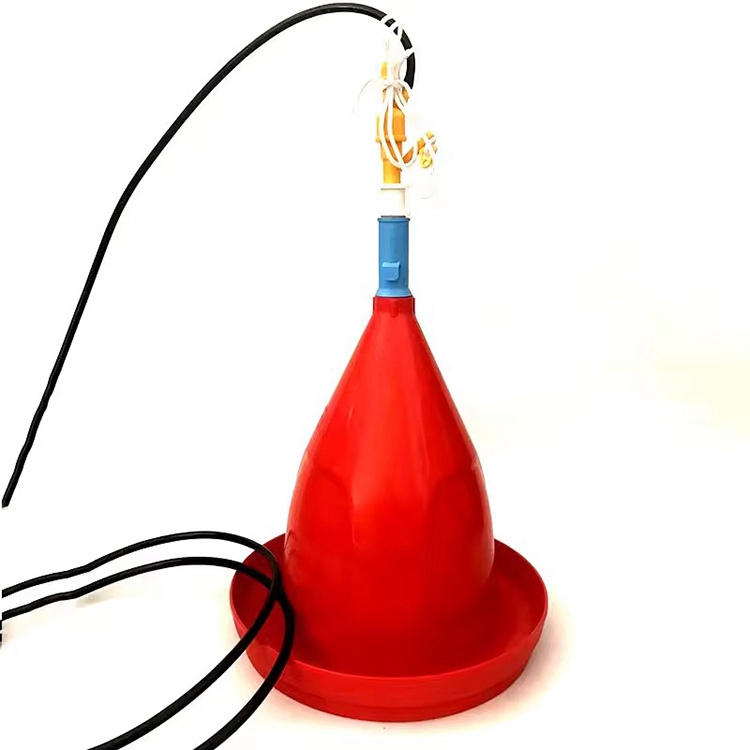
Automatic poultry waterers are mainly composed of a bowl body, a trigger water-dispensing mechanism, a water inlet, and a valve. The working principle is as follows: when a poultry bird extends its head into the bowl to drink, its beak or head touches the trigger rod (or pressure plate), which opens the valve and allows water to flow from the inlet into the bowl. After the bird finishes drinking and leaves, the trigger rod returns to its original position, the valve closes, and water flow stops. The bowl always maintains a certain water level, allowing the poultry to drink at any time.
The high-quality automatic water bowl features a sensitive trigger that dispenses water with a light touch and stops when released. The valve has excellent sealing performance to prevent leaks. The bowl's design is reasonable, preventing poultry from stepping in and splashing water. The material is safe, non-toxic, durable, and easy to clean.
II. Key Points for Selection
1. Selection based on the breed being raised: Different poultry breeds have different requirements for water bowls. Chickens are suitable for water bowls with smaller openings and less water capacity; waterfowl such as ducks and geese are suitable for water bowls with larger openings and greater water capacity, as waterfowl enjoy playing in water and require larger bowl bodies. During the brooding period, small water bowls specifically designed for chicks should be used, with shallow openings to prevent chicks from drowning.
2. Select based on the rearing method: Hanging water bowls are suitable for cage rearing and should be attached to the cage door; floor water bowls or suspended water bowls are suitable for floor rearing. For floor rearing, choose models with a higher bowl body to prevent poultry from stepping into the bowl or bringing bedding material into it.
3. Focus on material quality: The bowl body of a high-quality water bowl is made of food-grade PP or ABS plastic, with a smooth surface, no burrs, no odor, uniform color, and resistance to aging and impact. The trigger lever and valve are made of high-quality stainless steel or copper, which are rust-resistant and durable. The sealing ring is made of food-grade silicone, offering good elasticity and a tight seal. Low-quality products use recycled plastic, which has a rough surface, an unpleasant odor, and is prone to aging and damage.
4. Test Trigger Performance: When purchasing, test the trigger sensitivity. A light touch on the trigger should smoothly open the valve, and it should close immediately upon release. The trigger force should be moderate; if it is too strong, poultry will have difficulty triggering it, and if it is too weak, it may be triggered accidentally. The valve should open and close smoothly without any sticking.
5. Check the sealing performance: Connect the water bowl to a water pipe and leave it under normal water pressure for a period of time. Observe whether there is any leakage at the valve and joints. High-quality products have good sealing performance and do not leak even after long-term use.
6. Consider ease of cleaning: Water bowls require frequent cleaning, so choose a model with a simple structure that is easy to disassemble and clean. The interior of the bowl should be smooth and free of dead corners to facilitate cleaning. The trigger mechanism should be removable to allow for easy cleaning of the interior.
7. Selecting Brands and After-Sales Service: Choose brand-name products manufactured by reputable companies to ensure better quality and after-sales service. Understand the warranty period and the availability of spare parts to facilitate future maintenance.
3. Installation Method
1. Selection of Installation Location: The water bowl should be installed in a location that is easily accessible and visible to the poultry. For cage-reared poultry, it should be hung in front of the cage door at a height level with the poultry's shoulders. For floor-reared poultry, the bowls should be evenly distributed throughout the poultry house, with a spacing of no more than 3 meters, to ensure that every bird can drink water conveniently. Do not install the water bowl directly above the feed trough to prevent water from splashing into the feed and causing it to mold.
2. Installation Height Adjustment: The rim of the water bowl should be level with the poultry's chest to facilitate drinking. If the height is too low, poultry may easily step into the bowl; if too high, they may not be able to reach it. Adjust the height promptly according to the age and body size of the poultry, generally checking and adjusting once a week.
3. Connect the water supply pipe: Drill a hole at the corresponding position on the water supply pipe and install the water inlet of the drinking bowl. Wrap the joint with PTFE tape or use a sealing ring to ensure no leakage. The water supply pipe diameter is generally 4/8 inch or 6/8 inch to ensure sufficient water flow. It is recommended to install an independent valve before each drinking bowl to facilitate individual maintenance and replacement.
4. Secure Fixation: Wall-mounted water bowls are fixed to the cage door using hooks or screws to ensure they are firmly attached and do not wobble. Floor-standing water bowls are placed on a flat surface with a level base to prevent tilting. Suspended water bowls are hung using steel cables or brackets, with adjustable height and secure fixation.
5. Water Flow Testing: After installation is complete, slowly open the water inlet valve to allow water to flow into the drinking bowl. Check whether the trigger mechanism is functioning properly; water should flow when the trigger lever is lightly touched and stop when released. Check if the water level in the bowl is appropriate; generally, the water level should be maintained between 1/3 and 1/2 of the bowl's depth. Check all connections for leaks.
IV. Key Points for Usage Management
1. Water Pressure Adjustment: Automatic water bowls have a wider range of water pressure adaptability than nipple drinkers, generally operating normally at 0.01-0.05 MPa. However, excessive water pressure can cause water to flow too forcefully, leading to splashing and waste, while insufficient water pressure can result in inadequate water flow. The water pressure should be adjusted to an appropriate range, generally 0.02-0.03 MPa is recommended. Install a pressure gauge to monitor the water pressure and ensure it remains stable.
2. Water Level Management: The water level in the bowl should be maintained at an appropriate height. If it is too high, it is prone to splashing and being stepped on by poultry; if it is too low, it will be inconvenient for poultry to drink. Adjust the position and angle of the trigger lever to control the water level, or choose a model with an adjustable water level. Check the water level daily and make timely adjustments if any abnormalities are found.
3. Water Quality Management: Ensure that drinking water is clean and hygienic by using water sources that meet the required standards. Install filters to remove impurities from the water, and clean or replace the filter cartridges regularly. When adding medications or additives to the drinking water, use them at the prescribed concentrations. After use, promptly clean the drinking bowls and pipes to prevent bacterial growth from residues.
4. Daily Observation: Monitor the poultry's water intake and the operational status of the water bowls daily. Promptly address any issues such as no water flow, leaks, or splashing. Pay attention to the water quality in the bowls, and clean and replace the water immediately if it becomes cloudy, contains foreign objects, or has an unusual odor. Observe the poultry's mental state and fecal condition, as abnormal water intake may be a sign of disease.
5. Prevent Freezing: In winter, take measures to prevent freezing and keep the pen temperature above 5°C to prevent water in the bowls from freezing. If ice is found, clean it up promptly. Do not knock on the bowl with hard objects to avoid damage. If necessary, use a drinking bowl with a heating function.
V. Maintenance and Care
1. Regular Cleaning: The drinking bowl should be cleaned once a day. Discard the remaining water, use a soft-bristled brush to clean the inner wall of the bowl and the trigger mechanism to remove limescale, feed residue, and biofilm, then rinse thoroughly with clean water. Be careful not to damage the sealing ring or the trigger mechanism during cleaning. The pipeline should be backflushed once a week.
2. Regular Disinfection: Disinfect the water bowls and water supply system every 1-2 weeks. You can use a bleaching powder solution (10-20 ppm available chlorine) or a chlorine dioxide solution. Soak for 30 minutes, then rinse thoroughly with clean water. After disinfection, test the residual chlorine to ensure there is no residue before using it for poultry.
3. Inspect and replace wear parts: Check the condition of components such as the trigger mechanism, valves, and seals once a month, and promptly replace any that show signs of aging, wear, or deformation. Seals should generally be replaced every 3 to 6 months, while trigger springs should be replaced based on usage conditions. Keep a sufficient stock of wear parts on hand to ensure timely replacement.
4. Regularly check the fixation status: Check the fixation of the water bowl once a week, and tighten it immediately if any looseness is found. For wall-mounted types, check whether the hooks are secure; for floor-standing types, check whether they are stable; for hanging types, check whether the hanging ropes are worn. Ensure that the water bowl is firmly installed and will not tip over or fall.
VI. Handling Common Issues
No water flow: Check for water supply interruption, low water pressure, clogged water inlet, or a stuck trigger mechanism. Address the issue by opening the valve, increasing water pressure, cleaning the water inlet, or repairing or replacing the trigger mechanism.
Water Leakage: Check whether the valve is stuck with foreign objects, whether the sealing ring is aged, and whether the connection is loose. Clean the valve, replace the sealing ring, and tighten the connection.
Severe splashing: Check whether the water pressure is too high, the water level is too high, or the trigger lever angle is appropriate. Reduce the water pressure, adjust the water level, and adjust the trigger lever angle.
Domestic poultry will not use it: In the initial stage, place a small amount of water in the bowl to guide the poultry, and manually and gently touch the trigger lever to let water flow out to attract the poultry's attention. Generally, the poultry will learn to use it within 1-2 days.
Summary
Automatic poultry water bowls are practical and reliable drinking devices for poultry, featuring stable water flow, independence from water pressure, and ease of learning for the birds. They are particularly suitable for waterfowl such as ducks and geese, as well as larger poultry breeds. When purchasing, farmers should select the appropriate model based on the poultry species and farming methods, paying attention to material quality, trigger performance, sealing performance, and ease of cleaning, and opt for branded products. During installation, choose an appropriate location and height, ensure secure connections, and perform water flow testing. During use, manage water pressure, water levels, and water quality, conduct daily observations, perform regular cleaning and disinfection, and replace wear parts promptly. Only through scientific selection, use, and maintenance can the advantages of automatic water bowls be fully realized, providing clean and hygienic drinking water for poultry, promoting their healthy growth, and improving farming efficiency.
References
1. Poultry Branch of the China Animal Husbandry Association. Report on the Development of Poultry Farming Equipment in China [R]. Beijing: China Animal Husbandry Association, 2023.
2. National Animal Husbandry Station. Standard for the Management of Facilities and Equipment in Large-Scale Poultry Farms [M]. Beijing: China Agriculture Press, 2022.
3. Poultry Research Institute, Chinese Academy of Agricultural Sciences. Manual on the Use and Maintenance of Poultry Farming Equipment [M]. Beijing: China Agricultural Science and Technology Press, 2021.
 Recommended Products
 Contact us
—— Contact:Manager
—— Tel:+86 15031740006
—— Email:mzan91369@gmail.com
—— Url:https://www.muzanlivestock.com
—— Address:Cang County, Cangzhou City, Hebei Province, China