
ProductsDetails
-
Rabbit Water Drinker
-
Farm Water Line and Feed Line
-
Farm Pressure Regulator
-
Pet Dog and Cat Water and Food Bowl
-
Poultry Pigeon Leg Bands
-
Poultry Automatic Drinking Bowl
-
Poultry Long Feeder Trough
-
Tail Docking Rings and Pliers
-
New Chicken Nipple Drinker
-
Cage Binding Pliers
-
Ear Tags
-
Ear Tag Pliers
-
Cross-Border Poultry Automatic Drinker
-
Cross-Border Auto Feeder and Waterer for Ducks Geese
-
Cross-Border Poultry Drinker and Feeder
-
Chick Bird Quail Drinking Bowl
-
Cattle Drinking Bowl
-
Poultry Transfer Crate
-
Poultry Bucket and Feeder
-
Chicken Automatic Drinker
-
Plasson Drinker
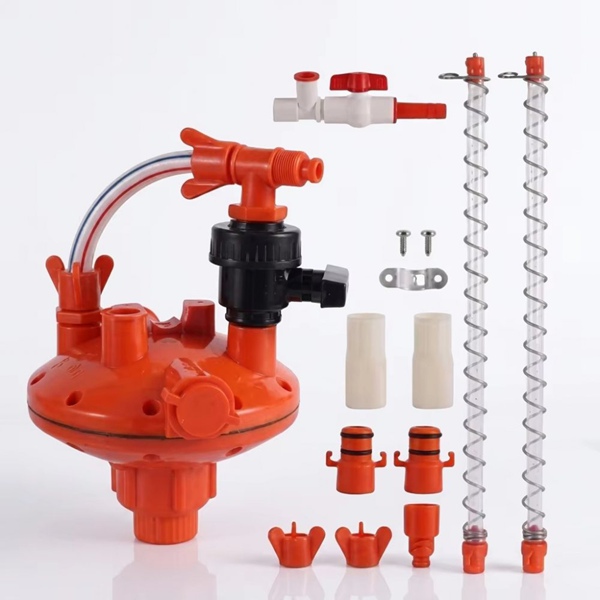
Farm Pressure Regulator Orange and Black
Product Introduction
The Farm Pressure Regulator Orange and Black is a high-performance water pressure regulator designed specifically for poultry and livestock automated watering systems, featuring a distinctive orange and black color scheme that provides high visibility and easy identification in the farm environment. This pressure regulator is the critical component that maintains consistent, stable water pressure throughout the drinking system, ensuring that every nipple drinker or drinking cup along the line delivers the correct amount of water to birds or livestock. Proper pressure regulation is essential for optimal animal health and performance: too low pressure results in insufficient water delivery, reduced water consumption, and dehydration, while too high pressure causes excessive leakage, wet litter, increased ammonia levels, and higher risk of footpad lesions, breast blisters, and disease. The orange and black regulator features a precision pressure control mechanism that maintains consistent output pressure regardless of fluctuations in incoming water pressure, making it suitable for farms with variable water supply conditions. Made of high-quality, durable materials including corrosion-resistant plastic body, stainless steel internal components, and food-grade seals, the regulator is built to withstand the harsh farm environment including constant water flow, pressure cycling, chemical exposure, and temperature fluctuations. Easy to install, operate, and maintain, with clearly marked adjustment controls and pressure indicators, this regulator is suitable for use in broiler houses, layer farms, breeder farms, duck farms, goose farms, and other poultry and livestock operations of all sizes.
Product Features and Advantages
Distinctive orange and black color scheme provides high visibility in the farm environment, making the pressure regulator easy to locate during routine inspections, adjustments, and maintenance, and reducing the risk of accidental damage during farm operations. Precision pressure control mechanism maintains consistent, stable output pressure within tight tolerances regardless of fluctuations in incoming water pressure, ensuring every drinker along the line delivers the correct amount of water at all times. Wide pressure adjustment range allows the regulator to be set to the optimal pressure for different bird species, ages, drinker types, and line configurations, from low pressure for young chicks with nipple drinkers to higher pressure for adult birds or cup drinker systems. The orange and black housing is made of high-quality, impact-resistant plastic that withstands the harsh farm environment including exposure to moisture, chemicals, UV light, temperature fluctuations, and physical impact, with colors that remain vibrant for years. Internal components are made of corrosion-resistant stainless steel and food-grade materials, ensuring long service life, reliable performance, and safe contact with drinking water. Clear, easy-to-read pressure indicators (water level gauge or pressure scale) allow farm staff to quickly verify and adjust the operating pressure, with markings showing recommended pressure ranges for different applications. The regulator includes integrated filtration to prevent debris from entering the drinking system, protecting drinkers from blockage and maintaining water quality. Easy-to-grip adjustment knob allows for smooth, precise pressure adjustment by hand without special tools, with clear tactile feedback and locking capability to prevent accidental changes. The regulator is designed for easy integration with standard farm water line systems, with universal connection sizes compatible with most common PVC pipe and tubing dimensions. Low maintenance design with easily accessible components for inspection, cleaning, and replacement, minimizing downtime and ensuring continuous operation. Each regulator is individually tested and calibrated at the factory to ensure accurate pressure regulation and leak-free performance before shipment. The orange and black color scheme also helps distinguish this regulator model from other equipment in the farm, making it easy for staff to identify and operate correctly. Suitable for both ground-reared and cage-reared poultry systems, with mounting options for suspension from the ceiling or mounting on walls or supports.
Installation, Operation and Maintenance
Installation: The orange and black pressure regulator should be installed by qualified personnel following the manufacturer's guidelines. Before installation, ensure the water supply to the system is turned off to prevent water spillage and ensure safe working conditions. Select an appropriate location for the regulator, typically at the beginning of the water line near the water supply entry point, with easy access for adjustment and maintenance. Ensure there is sufficient space around the regulator for operation, inspection, and future maintenance. Install any required pre-filtration (if not integrated) upstream of the regulator to protect it from debris and sediment. Connect the incoming water supply to the regulator inlet port using appropriate fittings, ensuring a secure, leak-free connection. Connect the regulator outlet port to the main water distribution line using the appropriate flexible tube or rigid pipe, allowing some flexibility for movement and vibration. If the system includes multiple water line zones, install a separate regulator for each zone to allow independent pressure control. Once all connections are secure, turn the water supply back on slowly and check for any leaks at all connection points and around the regulator body. Adjust the regulator to the desired operating pressure using the adjustment knob, referring to the pressure indicator and manufacturer's recommendations for the specific bird species, age, and drinker type. Verify water delivery at several drinkers along the line to ensure consistent, appropriate flow and pressure. If the regulator includes a drain or flush valve, use it to flush any air or debris from the system before final operation. Operation: Proper operation of the pressure regulator is essential for maintaining optimal water pressure and animal performance. Recommended operating pressures vary by application: for broilers with nipple drinkers, typical pressure is 5-15 cm water column (lower for young chicks, higher for larger birds); for layers, 10-20 cm water column; for ducks and geese with cup drinkers, pressure may be higher to maintain proper cup water levels; for breeder birds, follow the primary breeder's recommendations. Always monitor actual drinker performance and adjust pressure as needed, rather than relying solely on theoretical settings. To increase pressure, turn the adjustment knob in the indicated direction (typically clockwise), monitoring the pressure indicator and verifying actual water delivery at the drinkers. To decrease pressure, turn in the opposite direction. After any adjustment, wait for the system to stabilize, then verify water delivery at multiple points along the line. The pressure indicator should be checked daily as part of the routine walk-through to ensure the setting has not changed and pressure remains within the normal range. If the farm has multiple houses or zones, verify each regulator is set to the appropriate pressure for the specific bird group in that area. Daily Maintenance: Check the pressure regulator during daily walk-throughs, verifying the pressure setting is correct and stable, there are no leaks around the regulator or connections, the pressure indicator shows normal operation, and water delivery at drinkers appears normal. Wipe the exterior of the regulator with a clean, damp cloth to remove any dust, dirt, or moisture, keeping the pressure indicator and adjustment controls clean and legible. Check for any signs of corrosion, damage, or excessive wear on the regulator body and connections. Verify the adjustment knob moves smoothly and the locking mechanism (if present) holds the setting securely. Weekly Maintenance: Inspect the regulator more thoroughly, checking for any signs of internal leakage (indicated by water seeping from vents or adjustment mechanisms), excessive play in the adjustment knob, or irregular pressure readings. If the regulator has an accessible filter or strainer, remove and clean it to remove any accumulated debris or sediment. Check all connection points for tightness and leaks, retightening if necessary. Exercise the adjustment mechanism through its full range a few times to ensure smooth operation and prevent seizing, then return to the normal operating setting. Monthly Maintenance: Perform a detailed inspection of the regulator, including verifying pressure accuracy against a calibrated pressure gauge if available, to ensure the indicator remains accurate. Clean the regulator thoroughly, including the pressure indicator and adjustment mechanism, to remove any mineral deposits or debris. Inspect internal components (if accessible) for wear or damage, and consider using a spare parts kit to replace worn seals, valves, or springs if performance has degraded. Flush the regulator and incoming line with a cleaning solution if biofilm or mineral buildup is suspected, following the cleaning product instructions and flushing thoroughly afterward. Annual Maintenance: Consider performing a major overhaul of the regulator during annual system maintenance, using a spare parts kit to replace all wear components including seals, gaskets, valves, springs, and diaphragms. Calibrate or verify pressure settings after any major maintenance or component replacement. If the regulator has been in service for more than 5-7 years, consider replacing it entirely, as internal components will have experienced significant wear and may be approaching the end of their service life. Keep a spare regulator or complete spare parts kit on hand for quick replacement if the existing regulator fails or requires major maintenance. Troubleshooting: If the regulator will not maintain consistent pressure (pressure fluctuates or drifts), check for debris or mineral deposits obstructing the valve mechanism, verify incoming pressure is within the regulator's operating range, inspect internal components for wear or damage, and check for air in the system. If pressure is too high and cannot be reduced, check for a stuck or damaged pressure reduction valve, excessive incoming pressure beyond the regulator's capacity, or improper installation. If pressure is too low and cannot be increased, check for clogged filters or strainers, restricted incoming flow, internal leaks bypassing the regulation mechanism, or worn valve components. If the regulator leaks from the body, adjustment mechanism, or vents, check for worn seals, cracked housing, improper assembly, or excessive internal pressure, and replace components or the entire regulator as necessary. If the adjustment knob is difficult to turn or seized, apply gentle pressure while turning, clean and lubricate the mechanism if accessible, or replace the regulator if seizing is severe. If water delivery at drinkers is inconsistent along the line (some drinkers work, others don't), check for air locks, line blockages, improper line slope, or pressure that is too low for the line length, and address accordingly.
 Recommended News
-
FAQ on Cross-Border Procurement of Livestock Equipment
2026-10-15 11:32:39
-
FAQ on Common Issues with Chick Brooding Watering Equipment
2026-10-15 11:29:59
-
FAQ on Selecting Aquaculture Equipment
2026-10-15 11:28:34
-
Causes and Solutions for Leaking Poultry Waterers
2026-10-15 11:27:03
-
Troubleshooting Common Faults in Water Line and Feed Line Systems of Farming Facilities
2026-10-15 11:25:44
Contact us
—— Contact:Manager
—— Tel:+86 15031740006
—— Email:mzan91369@gmail.com
—— Url:https://www.muzanlivestock.com
—— Address:Cang County, Cangzhou City, Hebei Province, China