
ProductsDetails
-
Rabbit Water Drinker
-
Farm Water Line and Feed Line
-
Farm Pressure Regulator
-
Pet Dog and Cat Water and Food Bowl
-
Poultry Pigeon Leg Bands
-
Poultry Automatic Drinking Bowl
-
Poultry Long Feeder Trough
-
Tail Docking Rings and Pliers
-
New Chicken Nipple Drinker
-
Cage Binding Pliers
-
Ear Tags
-
Ear Tag Pliers
-
Cross-Border Poultry Automatic Drinker
-
Cross-Border Auto Feeder and Waterer for Ducks Geese
-
Cross-Border Poultry Drinker and Feeder
-
Chick Bird Quail Drinking Bowl
-
Cattle Drinking Bowl
-
Poultry Transfer Crate
-
Poultry Bucket and Feeder
-
Chicken Automatic Drinker
-
Plasson Drinker
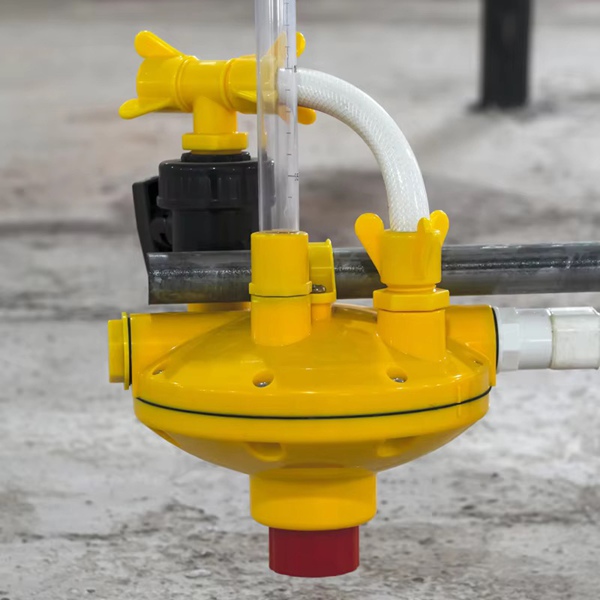
Farm Pressure Regulator Yellow Graduated Valve
Product Introduction
The Farm Pressure Regulator Yellow Graduated Valve is a precision control component designed for use with farm water pressure regulators, providing accurate, repeatable pressure adjustment through clearly marked scale graduations. The bright yellow valve body and adjustment knob provide high visibility in the farm environment, making the pressure regulator easy to locate and adjust during routine operations. The graduated scale markings on the valve allow farm staff to set and reproduce specific pressure settings with precision, ensuring consistent water pressure across the farm and making it easy to return to known-good settings after adjustment or maintenance. This valve is an essential component of the pressure regulator system, controlling the output water pressure that feeds the drinking lines and ultimately the nipple drinkers or drinking cups used by poultry and livestock. Proper pressure regulation is critical: too low pressure results in insufficient water delivery and reduced water consumption, while too high pressure causes excessive leakage, wet litter, and increased disease risk. Made of durable, corrosion-resistant materials, the valve is built to withstand the daily rigors of the farm environment including constant water flow, pressure cycling, chemical exposure, and regular handling. Easy to install, operate, and maintain, this graduated valve is compatible with most standard farm pressure regulator models. Suitable for use in broiler houses, layer farms, breeder farms, duck farms, goose farms, and other poultry and livestock operations where precise water pressure control is essential for optimal animal health and performance.
Product Features and Advantages
Clearly marked graduated scale allows for precise, repeatable pressure adjustment, with numerical or visual indicators showing the current pressure setting, enabling farm staff to set and reproduce specific pressure levels accurately. Bright yellow valve body and adjustment knob provide high visibility in the farm environment, making the pressure regulator easy to locate during routine inspections and adjustments, and reducing the risk of accidental damage or improper handling. Precision valve mechanism ensures stable, consistent output pressure regardless of fluctuations in incoming water pressure, maintaining the set pressure level within tight tolerances for reliable water delivery to all drinkers. Durable construction using high-quality, corrosion-resistant materials selected for long service life in the harsh farm environment, with resistance to water, chemicals, mineral deposits, pressure cycling, and temperature fluctuations. Easy-to-grip adjustment knob allows for smooth, precise pressure adjustment by hand, without requiring special tools, with clear tactile feedback as the valve is adjusted. The graduated scale makes it easy to document and communicate pressure settings, ensuring all farm staff use consistent settings and making it simple to return to known-good settings after maintenance or troubleshooting. Locking mechanism (where applicable) allows the valve to be locked at the desired setting, preventing accidental adjustment by unauthorized personnel or during cleaning and maintenance operations. The valve is designed for easy integration with standard pressure regulator bodies, with universal connection sizes and mounting patterns compatible with most common farm pressure regulator models. Low-torque operation means the valve can be adjusted smoothly and easily even with wet or gloved hands, making it convenient for farm staff to use in all working conditions. Each graduated valve is individually tested and calibrated at the factory to ensure accurate scale markings and reliable pressure regulation performance before shipment. The yellow color also serves as a visual safety indicator, making the high-pressure component more visible and reducing the risk of accidental damage during farm operations. Replaceable design means the valve can be easily removed and replaced if it becomes worn or damaged, without requiring replacement of the entire pressure regulator, minimizing maintenance costs and downtime.
Installation, Operation and Maintenance
Installation: The yellow graduated valve is designed for easy installation on standard farm pressure regulators. Before installation, ensure the water supply to the regulator is turned off to prevent water spillage and ensure safe working conditions. Remove any protective packaging from the new valve and inspect it for any damage, defects, or loose components. If replacing an existing valve, carefully remove the old valve from the regulator body, taking note of the orientation, connection points, and any gaskets or seals in place. Clean the valve mounting surface on the regulator body, removing any old gasket material, mineral deposits, or debris. Position the new graduated valve on the regulator body, ensuring proper orientation with the adjustment knob and scale facing outward for easy access and reading. Install any gaskets or seals between the valve and regulator body, ensuring they are properly positioned to prevent leaks. Secure the valve in place using the appropriate fasteners, tightening evenly to ensure a secure, leak-free connection. Turn the water supply back on slowly and check for any leaks around the valve mounting point. Adjust the valve to the desired pressure setting using the graduated scale as a guide, and verify the actual output pressure using a pressure gauge or by checking water delivery at the drinkers. Operation: Proper operation of the graduated valve is essential for maintaining optimal water pressure in the drinking system. Recommended pressure settings vary by bird species, age, drinker type, and line length: for broilers with nipple drinkers, typical operating pressure is 5-15 cm of water column, with lower pressure for young chicks and higher pressure for larger birds; for layers, typical pressure is 10-20 cm water column; for ducks and geese using cup drinkers, pressure may be higher to maintain proper cup water levels. Always consult the equipment manufacturer's recommendations and adjust based on actual performance observation. To increase pressure, turn the adjustment knob in the direction indicated (typically clockwise), monitoring the scale and verifying actual pressure. To decrease pressure, turn the knob in the opposite direction. After any adjustment, wait a few moments for the system to stabilize, then verify water delivery at several drinkers along the line to ensure consistent, appropriate flow. The graduated scale allows you to note the current setting for documentation purposes, and to quickly return to a known setting if adjustments are made for different bird groups or management practices. Daily Operation Check: During the daily walk-through, verify the valve setting has not changed, check for any leaks around the valve, and confirm water pressure appears normal based on drinker performance and water level indicators. If the farm has multiple houses or lines with separate regulators, verify all valves are set to the appropriate pressure for the specific bird group in each area. Daily Maintenance: Check the graduated valve during daily walk-throughs, verifying the setting is correct, there are no leaks, and the adjustment knob moves smoothly if adjustment is needed. Wipe the exterior of the valve with a clean, damp cloth to remove any dust, dirt, or moisture, keeping the scale markings clean and legible. Check for any signs of corrosion, damage, or excessive wear on the valve body and adjustment mechanism. Verify the scale markings remain legible and the yellow color remains vibrant. Weekly Maintenance: Inspect the valve more thoroughly, checking for any signs of internal leakage (indicated by water seeping from the adjustment mechanism or vent), excessive play in the adjustment knob, or difficulty turning. If the valve is accessible, exercise the adjustment mechanism through its full range a few times to ensure smooth operation and prevent seizing, then return to the normal operating setting. Check all connection points for tightness and leaks. Monthly Maintenance: Perform a more detailed inspection of the valve, including verifying pressure accuracy against a calibrated pressure gauge if available, to ensure the scale markings remain accurate. Clean the valve thoroughly, including the adjustment mechanism, to remove any mineral deposits or debris that could affect operation. Check for any signs of wear on internal components (if accessible), and consider replacing the valve if performance has degraded or if it has been in service for an extended period. Annual Maintenance: Consider replacing the graduated valve during annual system maintenance, especially if the farm has hard water or uses aggressive water treatments that can accelerate wear and mineral buildup. Calibrate or verify pressure settings after any valve replacement or major maintenance. Keep a spare graduated valve on hand for quick replacement if the existing valve fails or becomes difficult to operate. Troubleshooting: If the valve will not maintain consistent pressure (pressure fluctuates or drifts), check for debris or mineral deposits obstructing the valve mechanism, verify incoming pressure is within the regulator's operating range, and inspect internal components for wear or damage. If the valve leaks from the adjustment mechanism or body, check for worn seals, cracked housing, or improper assembly, and replace the valve if necessary. If the adjustment knob is difficult to turn or seized, apply gentle pressure while turning, clean and lubricate the mechanism if accessible, or replace the valve if seizing is severe. If pressure cannot be adjusted (turning the knob has no effect), check for a broken or disconnected internal mechanism, severe blockage, or improper installation, and replace the valve if the issue cannot be resolved. If the scale markings have become illegible or worn off, clean the surface carefully, or replace the valve if markings cannot be restored, as accurate scale reading is essential for proper pressure management.
 Recommended News
-
FAQ on Cross-Border Procurement of Livestock Equipment
2026-10-15 11:32:39
-
FAQ on Common Issues with Chick Brooding Watering Equipment
2026-10-15 11:29:59
-
FAQ on Selecting Aquaculture Equipment
2026-10-15 11:28:34
-
Causes and Solutions for Leaking Poultry Waterers
2026-10-15 11:27:03
-
Troubleshooting Common Faults in Water Line and Feed Line Systems of Farming Facilities
2026-10-15 11:25:44
Contact us
—— Contact:Manager
—— Tel:+86 15031740006
—— Email:mzan91369@gmail.com
—— Url:https://www.muzanlivestock.com
—— Address:Cang County, Cangzhou City, Hebei Province, China